
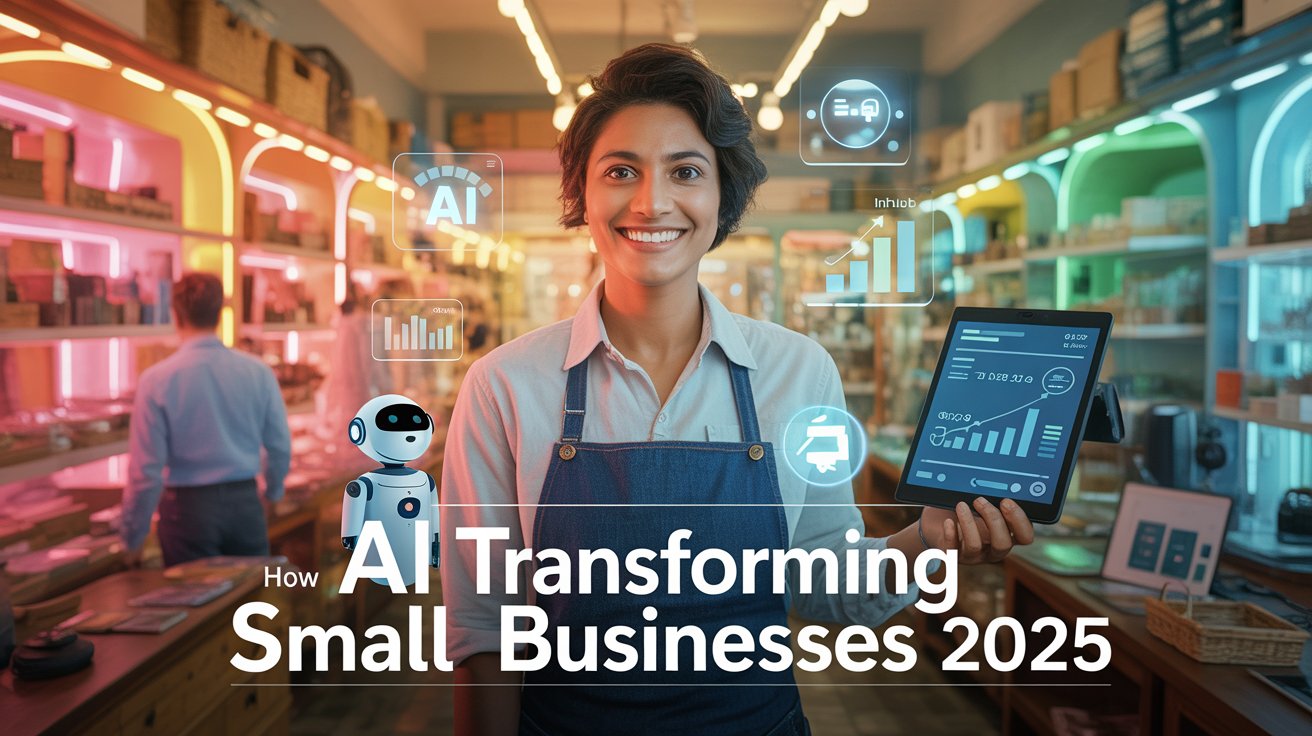
The landscape of small businesses in India is undergoing a remarkable transformation. In 2025, Artificial Intelligence is no longer the exclusive domain of large corporations—it has become an accessible and powerful tool for local entrepreneurs, startups, and small-scale enterprises across the country. This democratization of technology is reshaping how Indian small businesses operate, compete, and grow.
The AI Revolution in India’s Small Business Sector
India’s small and medium enterprises (SMEs) contribute nearly 30% to the country’s GDP and employ over 110 million people. As these businesses embrace AI technologies, they’re discovering unprecedented opportunities to streamline operations, enhance customer experiences, and compete on a larger scale.
1. Customer Service Excellence Through AI-Powered Solutions
One of the most significant impacts of AI has been in customer service. Small businesses that once struggled to provide round-the-clock support can now offer 24/7 assistance through intelligent chatbots and virtual assistants.
Real-World Impact:
- Businesses using AI chatbots on WhatsApp and Facebook Messenger are handling up to 80% of routine customer queries automatically
- Average response time has decreased from hours to seconds
- Customer satisfaction rates have improved by 40-60% for businesses implementing AI support systems
- Multilingual AI assistants are breaking language barriers, allowing businesses to serve diverse Indian markets effectively
A textile retailer in Surat reports saving 15 hours per week on customer queries since implementing an AI chatbot, allowing the owner to focus on business growth and product development.
2. Smart Inventory Management and Supply Chain Optimization
Inventory management has traditionally been a challenge for small businesses, often leading to either stockouts or excess inventory. AI-powered inventory systems are changing this dynamic completely.
Key Benefits:
- Predictive analytics forecast demand based on historical data, seasonal trends, and market patterns
- Automated reordering prevents stockouts while minimizing excess inventory
- Real-time tracking reduces losses from expired or damaged goods
- AI algorithms optimize storage space and reduce warehousing costs by 20-30%
A chain of kirana stores in Bangalore implemented AI inventory management and reduced their wastage by 35% while improving product availability by 45%.
3. Financial Management and Accounting Made Simple
AI-powered accounting tools are making financial management accessible and effortless for small business owners who lack formal accounting expertise.
Transformative Features:
- Automatic expense categorization and invoice generation
- GST compliance made simple with AI-powered filing systems
- Cash flow prediction helping businesses plan better
- Fraud detection algorithms identifying suspicious transactions
- Real-time financial insights enabling data-driven decisions
Small businesses using AI accounting platforms report saving 10-15 hours monthly on bookkeeping tasks and reducing accounting errors by up to 90%.
4. Marketing Revolution: Personalization at Scale
AI is enabling small businesses to compete with larger companies in marketing effectiveness through sophisticated targeting and personalization.
Marketing Advantages:
- AI analyzes customer behavior to create targeted campaigns
- Automated social media management schedules optimal posting times
- Personalized email marketing increases conversion rates by 50-70%
- AI-generated content helps maintain consistent online presence
- Predictive analytics identify high-value customers and optimal pricing strategies
A small fashion boutique in Mumbai increased online sales by 120% within six months using AI-powered marketing tools that personalized recommendations for each customer.
5. Voice Commerce and Regional Language Support
India’s linguistic diversity has always been a challenge for digital commerce. AI-powered voice recognition and regional language support are breaking down these barriers.
Emerging Trends:
- Voice-activated shopping in Hindi, Tamil, Bengali, and other regional languages
- AI translation services enabling businesses to operate across linguistic boundaries
- Voice search optimization helping local businesses get discovered
- Regional language chatbots making e-commerce accessible to non-English speakers
This technology is particularly transformative in Tier 2 and Tier 3 cities, where English literacy rates are lower but smartphone penetration is high.
6. Predictive Analytics for Better Decision Making
Small business owners are now making data-driven decisions that were once only possible for large corporations with dedicated analytics teams.
Strategic Applications:
- Sales forecasting with 85-90% accuracy
- Customer churn prediction enabling proactive retention
- Pricing optimization based on demand, competition, and market conditions
- Trend identification helping businesses stay ahead of market shifts
- Risk assessment for credit decisions and business expansion
7. AI-Powered Human Resources Management
Even businesses with 5-10 employees are benefiting from AI HR tools that streamline recruitment, attendance, and performance management.
HR Efficiency Gains:
- Automated resume screening reduces hiring time by 60%
- AI-powered employee scheduling optimizes shift management
- Performance tracking provides actionable insights
- Salary benchmarking ensures competitive compensation
- Automated compliance with labor laws and regulations
8. Quality Control and Product Inspection
Manufacturing small businesses are using AI-powered visual inspection systems to maintain quality standards without expensive equipment.
Quality Improvements:
- Computer vision detects defects with 95%+ accuracy
- Reduced dependency on manual inspection
- Faster quality checks enabling higher production volumes
- Detailed quality reports identifying recurring issues
- Cost reduction in quality control processes by 40-50%
Challenges and Considerations
While AI adoption offers tremendous benefits, Indian small businesses face certain challenges:
Key Barriers:
- Initial investment costs, though decreasing rapidly
- Digital literacy gaps among business owners and staff
- Internet connectivity issues in rural and semi-urban areas
- Data privacy and security concerns
- Integration with existing systems and processes
Solutions Emerging:
- Government initiatives like Digital India are improving infrastructure
- Affordable SaaS-based AI tools with pay-as-you-go models
- Training programs by industry associations and tech companies
- Cloud-based solutions requiring minimal hardware investment
The Road Ahead: AI Adoption Trends
The future of AI in Indian small businesses looks promising:
2025 Projections:
- AI adoption among small businesses expected to reach 45% by end of 2025
- Average cost of AI tools declining by 30% annually
- Integration of AI with UPI and digital payment systems
- Rise of AI-powered lending and financial services for small businesses
- Increased government support through subsidies and training programs
Getting Started: Practical Steps for Small Businesses
For entrepreneurs looking to embrace AI, here’s a practical roadmap:
- Start Small: Begin with one pain point—customer service, inventory, or accounting
- Choose User-Friendly Tools: Opt for platforms designed for non-technical users
- Invest in Training: Ensure your team understands and can use the technology
- Monitor ROI: Track metrics to measure impact and adjust strategy
- Stay Updated: Technology evolves rapidly; continuous learning is essential
Conclusion
AI is not just transforming Indian small businesses—it’s democratizing opportunity. In 2025, a small shopkeeper in Varanasi has access to the same sophisticated technology that powers Fortune 500 companies. This leveling of the playing field is creating a more competitive, efficient, and innovative small business ecosystem.
The businesses that embrace AI today are not just improving their current operations; they’re future-proofing their enterprises for an increasingly digital economy. As AI tools become more affordable and accessible, the question for Indian small businesses is no longer “Should we adopt AI?” but rather “How quickly can we get started?”
The AI revolution in Indian small businesses has begun. Those who adapt will thrive; those who hesitate risk being left behind. The technology is ready. The infrastructure is improving. The time to act is now.
About the Author: This article explores the practical applications of AI technology in India’s small business sector, drawing on current trends, case studies, and expert projections for 2025.
Keywords: AI for small businesses India, artificial intelligence SMEs, Indian business transformation, AI tools 2025, small business technology, digital India, AI chatbots, inventory management, customer service automation