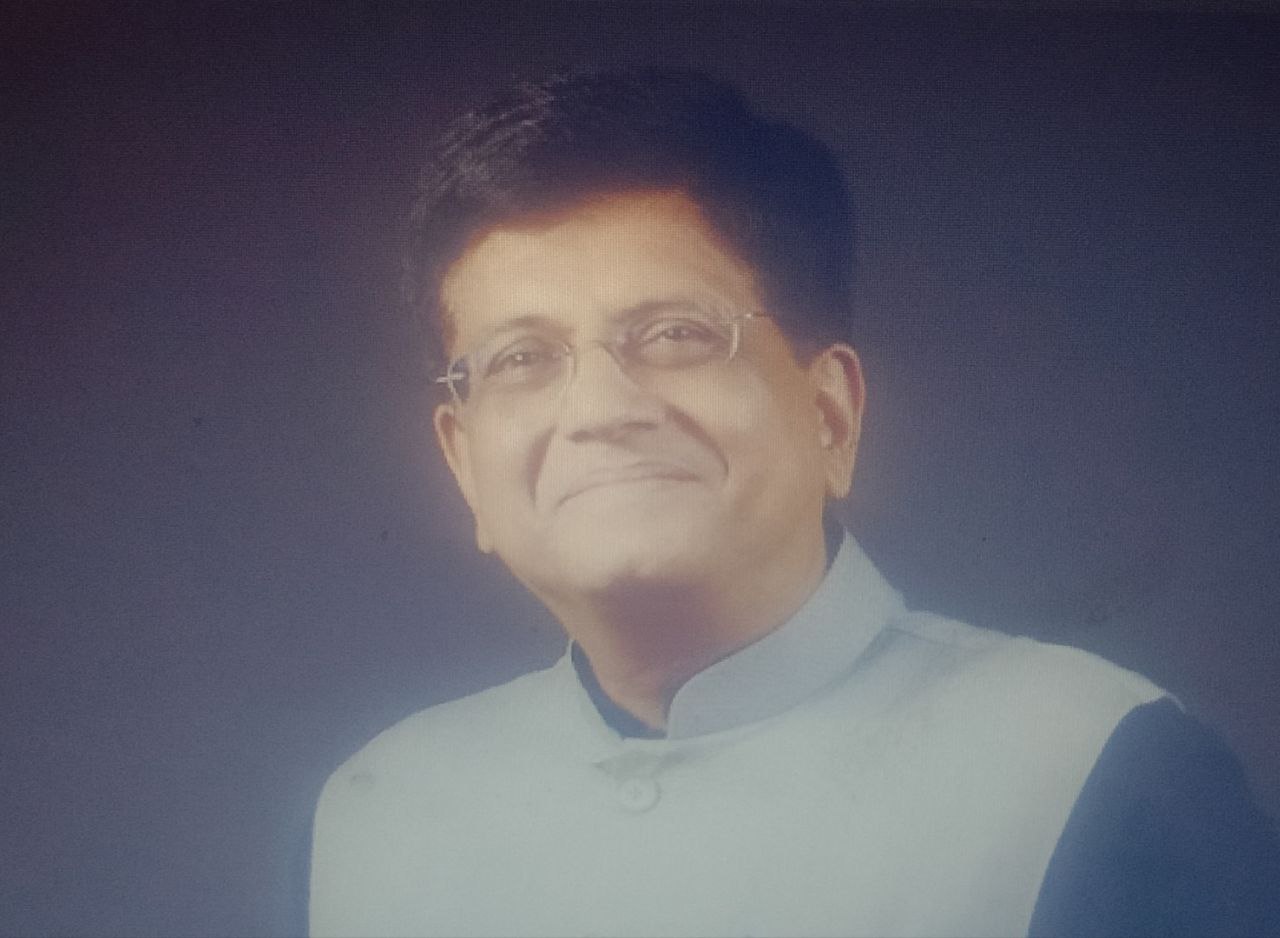
Piyush Goyal and the Indian Startup Ecosystem: A Comprehensive Analysis Piyush Goyal currently serves as the Minister of Commerce and Industry, Consumer Affairs & Food & Public Distribution and Textiles, and holds the position of Leader of House in Rajya Sabha. This significant portfolio places him at the center of India’s economic policies, with direct oversight of commerce and industry, making him a pivotal figure in shaping the trajectory of the nation’s burgeoning startup ecosystem. His extensive political career includes prior ministerial roles in key sectors such as Railways, Coal, Power, and Finance , providing him with a broad understanding of India’s developmental needs and the levers of economic growth. This report aims to provide a comprehensive analysis of Piyush Goyal’s role and impact on the Indian startup ecosystem, examining the policies he has championed, his vision for the sector, the resulting impact, and the challenges and criticisms that have emerged during his tenure.
As the Minister of Commerce and Industry , Piyush Goyal is at the forefront of the government’s efforts to promote industrial growth and foster innovation, with the startup ecosystem being a critical component of this agenda. The Ministry of Commerce and Industry plays a vital role in creating a conducive environment for startups through its various departments and initiatives. Notably, the Department for Promotion of Industry and Internal Trade (DPIIT), operating under this ministry, is the central agency responsible for spearheading startup initiatives in India. DPIIT is instrumental in defining startups, managing the recognition process that allows them to access government benefits, and implementing a range of policies and schemes designed to provide financial, regulatory, and infrastructural support. Piyush Goyal’s active engagement with the startup community is evident through his participation in key events such as Startup Mahakumbh. His presence and addresses at these forums underscore the government’s focus on the startup sector and provide a platform for direct interaction with entrepreneurs, investors, and other stakeholders.
Under Piyush Goyal’s leadership, several key government policies and initiatives have been instrumental in shaping the Indian startup ecosystem. The Startup India Initiative, launched in 2016, serves as the overarching framework for the government’s support, with the primary goals of fostering innovation, driving economic growth, and generating employment opportunities. This initiative encompasses various measures aimed at simplifying the regulatory landscape for startups, including streamlined compliance procedures, the provision for self-certification under certain labor and environmental laws , and the establishment of single-window clearances to ease the process of setting up and running a business. DPIIT plays a crucial role in this initiative by recognizing eligible startups, which then become entitled to a range of benefits and support mechanisms.
Access to funding is a critical element for the growth of startups, and the government has addressed this through the Fund of Funds for Startups (FFS). The primary objective of FFS is to enhance the availability of domestic capital for startups by investing in Alternative Investment Funds (AIFs) that, in turn, invest in startups. The government initially committed ₹10,000 crore to this fund and has since approved a second tranche of another ₹10,000 crore , signaling a continued focus on bolstering the financial ecosystem for startups. Notably, the second tranche of FFS emphasizes providing seed funding to smaller startups and supporting innovation in deep-tech sectors , indicating a strategic direction towards nurturing early-stage ventures and promoting advanced technologies.
To further support startups in their nascent stages, the government launched the Startup India Seed Fund Scheme (SISFS). SISFS aims to provide financial assistance to startups for critical early-stage activities such as proof of concept validation, prototype development, product trials, market entry, and commercialization. Under this scheme, eligible startups can receive a grant of up to ₹20 Lakhs for validation and prototype development, and an investment of up to ₹50 Lakhs for market entry and scaling up. This direct financial support is designed to help startups overcome the initial hurdles of bringing their ideas to fruition.
In a move to enhance accessibility and responsiveness, Piyush Goyal announced the establishment of a dedicated Startup India Desk. This desk functions as a helpline for startups across India, providing a direct channel to voice concerns, seek guidance, and report issues such as bureaucratic harassment or corruption. The helpline is accessible through a simple toll-free number and offers support in regional languages, ensuring wider reach and inclusivity. Located within DPIIT, the Startup India Desk underscores the government’s commitment to being readily available to address the needs of the startup community.
Piyush Goyal has consistently articulated a strong vision for the Indian startup ecosystem, emphasizing its pivotal role in India’s economic future. He has frequently called upon startups to increasingly focus on deep-tech sectors, including artificial intelligence, robotics, quantum computing, biotechnology, and semiconductors, rather than solely concentrating on consumer-facing applications. This emphasis reflects his ambition for India to emerge as a global leader in advanced technologies, with startups playing a crucial role in this transformation. During Startup Mahakumbh 2025, Goyal notably presented a “India vs. China: The Startup Reality Check” comparison, urging Indian startups to “think bigger” and pursue ventures with greater global impact and technological depth. He has also consistently highlighted the government’s commitment to creating an enabling environment for startups through ongoing ease of doing business reforms, recognizing that a supportive regulatory landscape is fundamental for their success.
The Indian startup ecosystem has witnessed remarkable growth, with the number of DPIIT-recognized startups exceeding 1.57 lakhs as of December 2024. This expansion, along with the emergence of over 100 unicorns , suggests the significant impact of government initiatives in fostering a vibrant entrepreneurial landscape. Schemes like the Fund of Funds for Startups have played a crucial role in boosting funding, with ₹10,000 crore committed in the first tranche and another ₹10,000 crore approved for the second. The Startup India Seed Fund Scheme has also provided vital early-stage capital, benefiting 2,622 startups with ₹467.75 crore in funding as of December 2024. Furthermore, the Credit Guarantee Scheme for Startups has facilitated access to collateral-free loans, guaranteeing 260 loans worth ₹604.16 crore to 209 startups by January 2025. Startups have also become significant engines of job creation, generating over 1.728 million direct jobs as of December 2024.
Metric Data (as of provided snippets) Source(s) Significance Recognized Startups Over 1.57 Lakhs (Dec 2024)
Demonstrates the scale and growth of the startup ecosystem. Unicorns Over 100
Indicates the emergence of high-value startups. Direct Jobs Created Over 1.728 Million (Dec 2024)
Highlights the significant contribution of startups to employment. FFS Corpus ₹20,000 Crore (Tranche 1 & 2)
Shows the government’s financial commitment to venture capital funding for startups. SISFS Outlay ₹945 Crore
Indicates the government’s investment in early-stage startup development. Startups Benefited under SISFS 2,622 (Dec 2024)
Shows the direct reach of the seed funding scheme. CGSS Guaranteed Loans 260 Loans worth ₹604.16 Crore (Jan 2025)
Demonstrates the facilitation of collateral-free loans for startups.
While the government’s efforts have yielded significant progress, Piyush Goyal has also acknowledged the need for Indian startups to increasingly focus on deep-tech innovation, expressing concerns about an overemphasis on consumer-facing applications. He has also called for greater domestic capital investment to support homegrown innovation and prevent the premature acquisition of promising startups by foreign entities. Entrepreneurs have also highlighted persistent challenges such as bureaucratic hurdles, corruption, and infrastructure deficits that can impede their growth. The establishment of the Startup India Desk is a proposed solution to address these grievances and provide more direct support to startups facing such issues.
Looking ahead, Piyush Goyal envisions India becoming a global hub for innovation and deep-tech, with Indian startups leading the way in cutting-edge technologies. The government has reiterated its continued commitment to supporting the startup ecosystem through ongoing investments in schemes like the Fund of Funds and the Seed Fund Scheme. There is a strong emphasis on building a robust pipeline of indigenous technology solutions to address national priorities and enhance India’s self-reliance in critical sectors.
Several successful Indian startups, including Ola Cabs, Swiggy, BYJU’s, Paytm, Zomato, Udaan, and Rivigo, have likely benefited from the overall supportive ecosystem fostered by government initiatives. Schemes like the Atal Innovation Mission (AIM), Startup India Seed Fund Scheme (SISFS), and Fund of Funds for Startups (FFS) have provided crucial support to a wide range of startups across various sectors and development stages.
However, Piyush Goyal’s remarks regarding the focus of Indian startups have sparked debate, with some entrepreneurs and industry leaders expressing concerns about the perceived belittling of consumer-focused ventures and emphasizing the need for more robust infrastructure and support for deep-tech initiatives. An alternative perspective suggests that Indian startups are rightly addressing the unique needs of the Indian market, and this focus should not be undervalued. The discourse surrounding startup policy has also become intertwined with political narratives, highlighting the complexities of evaluating the government’s role in this dynamic sector.
In conclusion, Piyush Goyal has played a significant role in shaping the Indian startup ecosystem through the formulation and implementation of key policies and his vocal advocacy for the sector. Government efforts have demonstrably contributed to the growth in funding, innovation, and job creation within the ecosystem. While challenges persist and debates continue regarding the optimal direction for Indian startups, the government’s ongoing commitment and vision for a globally competitive and technologically advanced startup landscape remain evident. Continued support, coupled with a responsive approach to addressing the evolving needs of the ecosystem, will be crucial in realizing India’s potential as a leading startup nation